Greetings from the Dean of the Faculty of Engineering
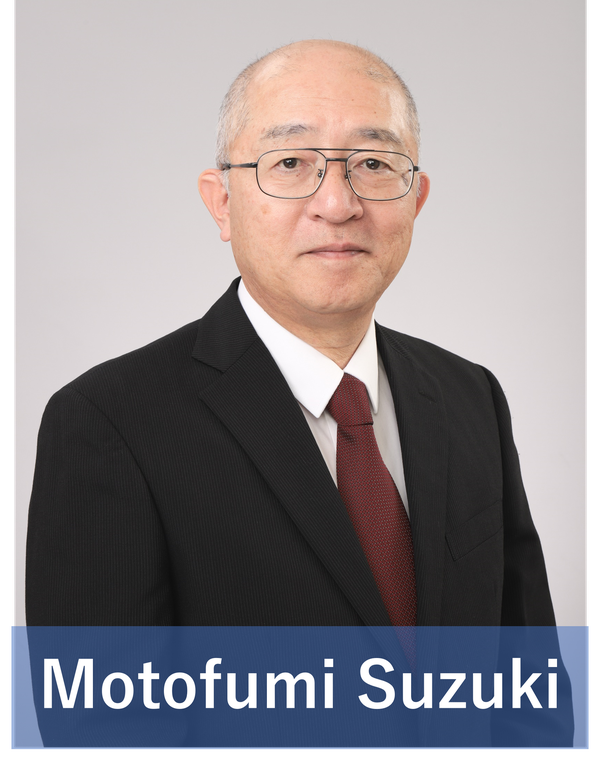
Welcome to the Faculty of Engineering at Kyoto University. Built upon the foundations of science, engineering is a discipline that creates things not found in nature and engenders the seeds of new scientific principles. Since our founding in 1897, we have continuously evolved alongside society, currently operating under a six-school system to tackle complex challenges. Today's engineering demands the design of a new society through "co-creation" across diverse fields. Embracing our "freedom of academic culture," we welcome all who strive to cultivate a solid academic foundation and a broad perspective to boldly challenge the unknown.
The academic discipline of "Engineering" does not exist as a specific subject name in the high school curriculum, where students focus primarily on "Science." Consequently, the field may feel somewhat unfamiliar not only to students outside our faculty but also to first- and second-year students who have only just enrolled in the Faculty of Engineering.
If we posit that Science (Rigaku) focuses primarily on "understanding the principles of the natural world itself," then Engineering (Kougaku) has developed for the practical purpose of applying those scientific principles to create "things that do not exist in nature," thereby contributing to human well-being and the resolution of societal issues. Representative examples include machines such as automobiles and aircraft, structures like bridges and skyscrapers, electronic devices typified by the smartphone, and the development of various advanced materials.
What is crucial here is that Engineering is a "discipline founded upon scientific principles." Therefore, students in the Faculty of Engineering devote their first and second years to thoroughly learning the foundations of science and technology—namely, mathematics, physics, and chemistry—which constitute the basis of Science. Upon this foundation, they will master the specialized subjects of their respective departments. In their final year, they will personally engage in the world's most advanced research and development. There, they may encounter the invention of new devices or systems that no one in the world has yet conceived, or perhaps the discovery of new phenomena previously unknown to humanity. Engineering is not merely a discipline of application, it is also a field that engenders the seeds of new scientific principles.
Engineering within the university setting is a relatively new academic domain that began in the latter half of the 19th century. The history of the Kyoto University Faculty of Engineering dates back to the establishment of the Department of Civil Engineering and the Department of Mechanical Engineering within the College of Science and Engineering at the university's founding in 1897 (Meiji 30), followed the next year by the establishment of the Department of Electrical Engineering, the Department of Mining and Metallurgy, and the Department of Manufacturing Chemistry. Subsequently, as industry diversified, new departments were added whenever new societal challenges or technological domains emerged, and at one point, more than 20 parallel departments existed.
However, the challenges facing modern society have become complex and are changing rapidly. They are increasingly difficult to resolve through knowledge confined to narrow specialized fields. Recognizing this imperative, approximately 30 years ago, the Faculty pioneered a system that reintegrated these subdivided fields of knowledge to foster a panoramic perspective. Currently, we conduct education and research under a comprehensive "Six-School" system comprising:
- The Undergraduate School of Civil, Environmental, and Resources Engineering
- The Undergraduate School of Architecture
- The Undergraduate School of Engineering Science
- The Undergraduate School of Electrical and Electronic Engineering
- The Undergraduate School of Informatics and Mathematical Science
- The Undergraduate School of Chemical Science and Technology (renamed in 2024 to more clearly demonstrate the collaboration between fundamentals and application)
Furthermore, in recent years, the Graduate School, which is closely linked to these undergraduate schools, has also been undergoing large-scale organizational reform across multiple majors to meet the demands of the era. The Faculty of Engineering now stands at a moment of evolution, boldly transforming itself while inheriting its traditions.
Until now, the mission of Engineering has placed its primary focus on "Manufacturing" (Monozukuri). However, the Engineering of the future is required to evolve this mission, contributing to the design and creation of a new society through science and technology. For instance, the societal challenges addressed in SDGs and Society 5.0—such as global warming, energy, food, water, health, and cybersecurity—can no longer be solved simply by creating a single convenient tool, nor can they be resolved through the academic study of a single department. Future engineering researchers and engineers must transcend the boundaries of departments and faculties, facing societal challenges through co-creation with people and organizations across a broad spectrum of fields.
This website introduces the latest information regarding the history, philosophy, education, and events of the Faculty of Engineering and its respective schools.
To current first- and second-year students: I strongly recommend that you confirm, at an early stage, the syllabi of the specialized subjects you will take as upper-year students. Realizing that many specialized subjects are predicated on foundational knowledge of mathematics, physics, and chemistry will surely serve as motivation for your current study of basic subjects.
Furthermore, for those of you awaiting provisional course assignments or laboratory placements, I encourage you to browse information regarding the laboratories within your department and let your imagination run free regarding your future research. In doing so, it is important not only to look at your preferred laboratory but also to examine laboratories in a wide range of fields to understand the positioning of the research you aim to pursue. If possible, learning about the research being conducted outside your own department will allow you to acquire an even broader perspective. The Faculty of Engineering at Kyoto University offers admission examinations and programs for international students, including the Special Selection for International Students, the International Course Program of the Undergraduate School of Civil Engineering, and the Kyoto University International Undergraduate Program (Kyoto iUP).
Kyoto University is often described as having "Freedom of academic culture" (Jiyu no Gakufu). The essence of this spirit lies in the ability to freely select research themes based on one's own beliefs and to explore them deeply. It is precisely because of this freedom that the Kyoto University Faculty of Engineering has been able to continuously transform itself. I challenge all current and prospective students to fully harness their flexible thinking and youthful energy within this environment of freedom and discipline, thereby contributing to the development of a new society.