Electrical, Electronic, and Digital Science and Engineering
In recent years, remarkable innovations have been witnessed in areas such as mobile information devices, medical equipment, the electrification and autonomous operation of vehicles, the realization of quantum computers, and advances in AI (artificial intelligence). It is no exaggeration to say that nearly all of these developments have been driven by progress in the principles and technologies of electrical and electronic engineering. Beginning in Academic Year 2026, the Department of Electrical Engineering and the Department of Electronic Science and Engineering will be integrated into a single department, the Department of Electrical, Electronic, and Digital Science and Engineering. The new department comprises three academic domains: Digital and Green Science and Engineering (newly established); Electrical, Systems, and Biomedical Engineering; and Photonic, Electronic, and Quantum Science and Engineering. Through interdisciplinary education and research at the forefront of electrical, electronic, and information sciences, the department aims to cultivate professionals who are grounded in physics and mathematics, capable of leveraging information technologies, and equipped to lead the advancement of a highly information-oriented society, while contributing to solutions for energy and environmental challenges.
Department Website
Research Laboratories
Digital and Green Science and Engineering
 Electrical and Information Systems
 Spatio-Temporal Sensing
 Intelligent Circuit Design
 Physical and Information Engineering
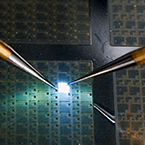 Advanced Optoelectronic Device Engineering
Electrical, Systems, and Biomedical Engineering
 Automatic Control Engineering
 Innovative Systems Theory
 Applied Superconductivity
 Electromagnetic Energy Engineering
 Space Radio Engineering
 Microwave Energy Transmission
 Space Radio Science Simulation
 Advanced Electric Machinery Engineering for Sustaining Global Environment
Photonic, Electronic, and Quantum Science and Engineering
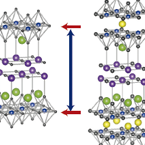 Frontier Electronic Functional Engineering
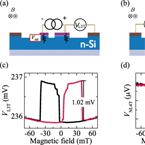 Condensed-Matter Physical Electronics
 Photonic Quantum Information
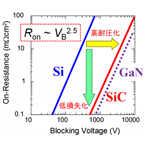 Semiconductor Science and Engineering
 Electronic Material Science and Engineering
 Quantum Optical Engineering